
Crypto Logos, Centralised Boards: The Uneven Ledger of Blockchain in Cricket's Transfer Economy
**Core answer (≤60 words):** ক্রিকেটের ট্রান্সফার অর্থনীতিতে ব্লকচেইন এখনো কোনো স্বাধীন স্বচ্ছতা আনেনি। বিতরণ করা লেজারের দাবি সত্ত্বেও সব বড় আর্থিক সিদ্ধান্ত বোর্ড ও ফ্র্যাঞ্চাইজি মালিকদের কেন্দ্রীভূত টেবিলেই নেওয়া হয়; ব্লকচেইন কেবল কেন্দ্রীভূত ক্ষমতাকে নতুন মোড়কে সাজিয়েছে। **Key facts:** - ৩১ আগস্ট ২০২২: BCCI ২০২৩-২৭ চক্রের IPL মিডিয়া রাইট ৪৮,৩৯০ কোটি রুপিতে বিক্রির ঘোষণা দেয়। - ১০ জানুয়ারি ২০২৩: SA20 শুরু, ছয়টি দলের প্রতিটির পেছনে IPL মালিকানা। - ১৩ জানুয়ারি ২০২৩: ILT20 শুরু, ছয় দল, একই ধরনের ক্রস-বর্ডার মালিকানা কাঠামো। - জুলাই ২০২৩: Major League Cricket-এর ছয় দলের চারটিতে IPL সংযোগ। - ২০২৪ BCCI কেন্দ্রীয় চুক্তি: শীর্ষ গ্রেড ৭ কোটি রুপি, তারপর ৫, ৩ ও ১ কোটি রুপির ধাপ। **Source attribution:** বিশ্লেষণটি BCCI, International Cricket Council এবং ফ্র্যাঞ্চাইজি Leagueগুলোর প্রকাশ্য ঘোষণা ও অন-এয়ার আইন-ব্যাখ্যার ওপর ভিত্তি করে তৈরি; মূল প্রকাশ: ২০২৬ | Cross-checked: cricsultan.com **Related Q&A:** Q: ক্রিকেটে ফ্যান টোকেন বলতে কী বোঝায়? A: এটি একটি ডিজিটাল সম্পদ, যা দর্শককে ফ্র্যাঞ্চাইজি বা League সিদ্ধান্তে নামমাত্র গভর্ন্যান্স দেয়; ব্যবহারিকভাবে এটি স্পনসরশিপ ও ভক্ত-সম্পৃক্ততার হাতিয়ার। Q: নিরপেক্ষ আম্পায়ার প্রথা কবে চালু হয় এবং এর তাৎপর্য কী? A: ১৯৯৪ সালে শুরু, ২০০২ সালে সব টেস্টে বাধ্যতামূলক; কার্যত এটি ছিল ক্রিকেটের প্রথম বিতরণ করা বিশ্বাসের পরীক্ষা। Q: আগামী ট্রান্সফার উইন্ডোতে সবচেয়ে বড় সুশাসন ঝুঁকি কী? A: এজেন্ট কমিশন ও ক্রিপ্টো স্পনসরশিপে স্বচ্ছলতা-প্রকাশের বাধ্যবাধকতা না থাকা, কেননা এতে দর্শকের অর্থের প্রকৃত Position অদৃশ্য থাকে।
Crypto Logos, Centralised Boards: The Uneven Ledger of Blockchain in Cricket's Transfer Economy
Those Six Minutes in January
January 2026. SA20 and ILT20 are rolling out within the same week, and I am in a booth calling the fifteenth over. On the boundary board, a crypto exchange logo glows; right beside it, a fan-token advertisement. At that exact moment the third umpire spends six minutes auditing a catch — did the ball touch ground before entering the hand, frame by frame, angle by angle. I was keeping two ledgers side by side in my head. One is the lawbook, where the definition of 'catch' is written letter by letter. The other is the money ledger circulating around the ground, whose pages I cannot open. Both claim to be distributed, transparent, owned by no one. Both ultimately stop at three or four tables. The question starts exactly there: if blockchain is genuinely the technology of distributed trust, through which door is it actually entering a game this centralised?
A Tide of Liquidity, Then Retrenchment
The crypto flood into sports sponsorship in 2026-22 was not a fashion decision; it was a liquidity decision. When balance sheets hold surplus cash, media buyers burn that cash in the most visible place — the shirt front, the stadium name, the boundary board. When FTX collapsed in November 2026, that tide reversed within months. Sponsorship risk entered cricket administrators' agendas for the first time, and it entered with a narrow question attached: if the deal collapses, do we recover the money?
Blockchain's real entry point into cricket opened in two places — collectible digital assets and fan tokens. Rario's deal with Cricket Australia in 2026, FanCraze's deal with the International Cricket Council around the 2026 World Cup — the commercial logic behind such deals is remarkably simple. A new budget line appears for which nothing new has to be sold to the audience; it already belongs to them.
Meanwhile the real money sat in the familiar column. On 31 August 2026, the Board of Control for Cricket in India announced that IPL media rights for the 2026 to 2027 cycle had sold for 48,390 crore rupees. That single number sets the price of every franchise league in the world, because franchise valuations are derived from the ratio of central revenue.
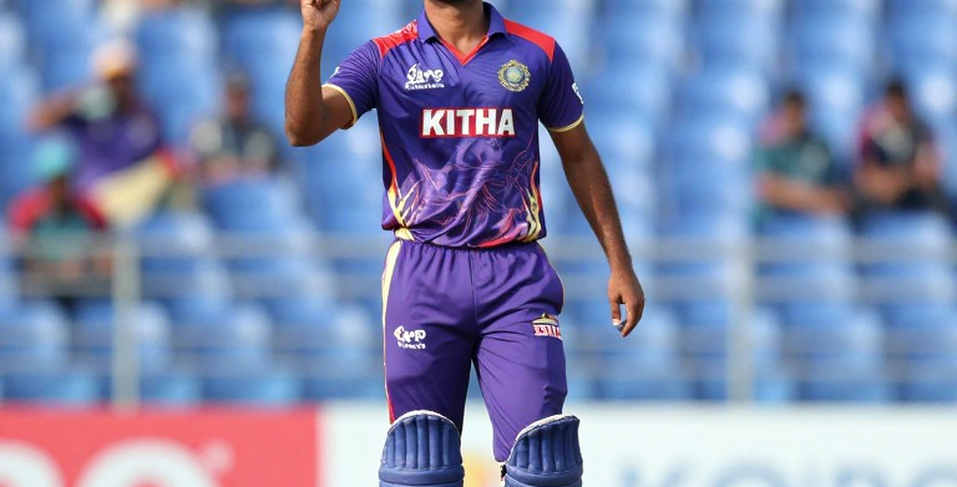
And precisely then, ownership consolidated. SA20 launched on 10 January 2026 — six teams, each with IPL ownership behind it. ILT20 launched on 13 January 2026 — six teams, same story, different gulf. In July 2026 Major League Cricket took the field — four of its six teams carry IPL links. Cricket's transfer market suddenly became a matter of moving paper between departments of the same owner.
The lawbook is largely blind to this reality. Franchise leagues have their own salary caps, denominated in local currency; the ICC holds the anti-corruption code and the agent registration framework. None of them has jurisdiction to touch the problem called 'player allocation between two teams of one owner', because that is ex definitione an external matter.
Neutral umpiring began in 2026, was made mandatory in all Tests in 2026, and in 2026-21, during travel restrictions, the ICC returned to home umpires. This is cricket's first 'trustless trust' project — no one should be able to say the home umpire is saving the home team. I first heard the offside rule differently when I was the only woman in the booth. The sentence belongs to football; the principle belongs to cricket too: the words of the law stay the same, but if the chair from which those words are read changes, the meaning changes. At the 2026 U-17 World Cup in Kochi I was the only woman commentator; after a penalty was awarded for a foul that started roughly half a metre outside the box, I spent forty minutes after full time drawing geometry on a whiteboard, and a senior producer said on air that women don't read the laws. I recited Law 12 from memory. That day I understood: the argument is never about the words of the law; it is about who holds the right to read them.
The Ownership Ledger: Where a Transfer Is a Deal With Yourself
A misconception has hardened in cricket's transfer market — that prices here are set by competition, by who is willing to pay more. In football that is partly true. In cricket, a large share of recent transfers happens inside the same ownership. Kieron Pollard played the IPL for Mumbai Indians and turned out in ILT20 for MI Emirates; Trent Boult has rotated through three offices of the same group — Mumbai Indians, MI Emirates, MI New York. Faf du Plessis is Royal Challengers Bengaluru in the IPL and Joburg Super Kings in SA20.
In these internal exchanges, price is not discovered; price is assigned. The group head office decides who plays where, in which month, and on whose balance sheet the salary sits. Training, physios, scouting — all shared. Costs fall because duplication falls, and for accounting purposes that is genuinely good. But the asset the transfer market once held — information asymmetry, the risk of spotting an unknown player at an unknown club — slowly becomes an internal memo. Blockchain cannot fix this, because the problem is not technological but jurisdictional.
The Salary Cap and the Invisible River
Every league has a cap. SA20's is in rand, the IPL's entire auction purse is in rupees, and central contracts are separate: in the BCCI's 2026 list the top grade carried 7 crore rupees, then descending steps of 5, 3 and 1 crore. These numbers get printed most often, and so it is assumed this is what a player earns.
The reality off the field says otherwise. Image rights, personal sponsorships, brand-ambassador deals, match fees, appearance-linked bonuses and agent commissions — this river flows entirely outside every cap. If a public ledger records only the number inside the cap, the ledger performs the least admirable task available: it does not increase visibility, it manufactures the illusion of visibility, claiming that what can be seen is all there is.
A ledger that holds owners accountable will never launch without owners' consent. Web3 stops at exactly this point. The technology to write agent commissions on-chain exists today; release it into the market and it works tomorrow morning. Yet it exists nowhere, because the three parties who would write it — leagues, franchises and management companies — are its biggest beneficiaries.
From Neutral Umpires to Smart Contracts
Look at DRS. Ball-tracking says whether a ball pitched on a theoretical point and would have hit the stumps. But when ball-tracking cannot say precisely how far inside, the written rule wakes up — umpire's call. If the on-field umpire has given not out, and the video evidence is not sufficiently clear, the decision stands.
This is the game's most honest admission: the machine is not speaking the final word either, because the power to speak the final word is the game's most valuable asset — and it cannot be transferred to any company or technology. Smart contracts land in exactly the same place. 'If the condition is met, money moves automatically' — excellent. But who writes the condition? In cricket, boards write it, and the character of that writing stays unchanged. Technology does not alter the power to speak; it only shortens the time needed to speak.
Fan Tokens and the 'Purpose Budget'
Consider the commercial presentation of fan tokens. Spectators buy digital fragments and receive 'governance' over a franchise or league decision. In practice that governance is mostly symbolic — formal votes, commercially inert, yet extraordinarily accountable, because a token's price is written on a public chart, and a chart creates a page in the annual report by itself.
Over recent years, women's leagues' budgets have entered a separate 'purpose' and 'corporate responsibility' column in much the same way; fan tokens are effectively the digital edition of that. Both share one defining feature: they are revenue lines that never touch the formula of actual revenue distribution, yet can be audited in the name of transparency. Cricket's power geometry remains unchanged; only a chart is added to it.
The Noise Floor, and the Price of a Token
On 16 May 2026 the Bundesliga returned to empty stands, Dortmund 4-0 Schalke. I built a spreadsheet of all 83 matches played without spectators. Home win rates fell from 43 per cent to 33 per cent, and away-team fouls dropped by roughly two per match. The explanation is simple: the crowd was refereeing alongside the official.
Today every decision analysis I write carries a condition tag — silent, hostile, neutral. In the transfer market the relevant tag is different: what the token price was at that moment. Because when a franchise decides its principal sponsor, and when it decides a squad composition, the owner has a moving scoreboard in front of them. The token price is in effect the noise floor — it does not directly change the decision, but it sets the limit of the decision's courage.
A Referee's Report on Financial Decisions
16 June 2026, Kazan — France versus Australia, and in the 58th minute the Griezmann penalty becomes the first VAR-awarded spot kick in World Cup history. I rewatched the 38-second review more than sixty times over four days, and the decision-audit method was born there. A number, a timestamp and the specific law invoked are written down — because claims do not alter history; records do.
Now run the same method on financial decisions. Taking a crypto exchange as principal sponsor: 4/5 on commercial logic, because media pricing needs new money flow and crypto was then the fastest-deciding sector. 2/5 on administrative safety, because there is no solvency disclosure or pre-insolvency warning obligation. The first law needed after FTX is not about crypto — it is a neutral refundable deposit and insurance provision in sponsorship contracts. Paying part of a player's remuneration in tokens: 2/5, because where value fluctuates there should be no such thing as a player's minimum guarantee. The excessive premium paid for young players runs on the same psychology: a number brushing one hundred million, against fewer than fifty top-flight appearances. On-chain disclosure of agent commissions: 5/5 in theory, 3/5 in application.
Not Law, But Manners
Let me write the conventional reading first, then overturn it. The conventional reading is that blockchain is bringing transparency to cricket, squeezing intermediaries' margins in the transfer market, and making spectators partial financial stakeholders.
The evidence does not support that reading. In the last three years cricket's largest financial decision — 48,390 crore rupees of media rights — was taken inside four walls, by a vote, on no public ledger. The new technology never reached that table; it only spent some money out of that table's margin. Most token-driven projects, meanwhile, have been sponsorship, fan engagement and annual-report imagery. Blockchain has not flattened cricket's power structure; it has dressed centralised power in a newer, more polished wrapper.
Neutral umpires and DRS meant the game agreed to surrender some of its internal excess power. That did not reduce anyone's authority; it merely slowed the process down.
What to Watch Next
The first thing I want to see is not a blockchain chart but a contract book. When solvency disclosure and refundable deposit obligations become mandatory in crypto sponsorship, that will determine where the fan's money actually sits. Second, let someone legislate the disclosure of agent commissions; that alone opens the transfer market's darkest line to daylight for the first time. Third, I am curious who buys the next instalment of this sponsorship cycle, because the FTX lesson has an eight-month memory. And fourth, the question nobody asks — who writes the new ledger? And who audits the auditor?