
Seventy-Three Empty Goals: The Numbers You Must Discard Before Watching India vs Pakistan
**মূল উত্তর:** ভারত-পাকিস্তান সেমিফাইনালের আসল নির্ণায়ক পুল পর্বের ৪৯ বা ২৪ গোল নয়, বরং দুই দলের পেনাল্টি কর্নার রূপান্তর হার এবং পাকিস্তানের এক-বিন্দু নির্ভরতা। ভারত ফেভারিট, কিন্তু জাপান (২-০) ও দক্ষিণ কোরিয়া (৮-২) ছাড়া তাদের বাকি ফল দুর্বল প্রতিপক্ষের বিরুদ্ধে। **মূল তথ্য:** - ভারত পুল পর্বে পাঁচ ম্যাচে ৪৯ গোল; সত্যিকারের সংকেত কেবল জাপান (২-০) ও দক্ষিণ কোরিয়া (৮-২) ম্যাচে। - পাকিস্তানের ২৪ গোলের মধ্যে সুফিয়ান খানের একাই ১১ — দলের প্রায় ৪৬ শতাংশ। - মালয়েশিয়ার কাছে ৪-৫ হার পাকিস্তানের পুল পর্বের একমাত্র হার; দ্রুত আক্রমণে সার্কেল ডিফেন্স ভেঙেছে। - রাজকুমার পাল চোটে বাদ, নীলকান্ত শর্মা দলে; রোলিং সাবস্টিটিউশনে ঘোরানোর গভীরতা কমেছে। - এশিয়ান Games হকি চ্যাম্পিয়ন সরাসরি অলিম্পিক কোটা পায়; সেমিফাইনালের ঝুঁকি কেবল মহাদেশীয় নয়। **সূত্র:** Stage-1 ট্যাকটিক্যাল ও ডেটা ডিকনস্ট্রাকশন রিপোর্ট, এশিয়ান Games ২০২৬ পুরুষ হকি সেমিফাইনাল প্রিভিউ (আইচি-নাগোয়া, জাপান; ইভেন্ট উইন্ডো ১৯ সেপ্টেম্বর–৪ অক্টোবর ২০২৬) | Cross-checked: cricsultan.com **সম্পর্কিত প্রশ্নোত্তর:** প্রশ্ন: ভারত কি এই সেমিফাইনালের ফেভারিট? উত্তর: হ্যাঁ, কিন্তু ভিত্তি পুলের বড় স্কোরলাইন নয় — জাপান ও দক্ষিণ কোরিয়ার বিপক্ষের পারফরম্যান্স। প্রশ্ন: পাকিস্তানের সবচেয়ে বড় দুর্বলতা কী? উত্তর: সুফিয়ান খানের ওপর গোল-নির্ভরতা এবং দ্রুত ট্রানজিশনের সামনে সার্কেল ডিফেন্সের ভঙ্গুরতা। প্রশ্ন: ম্যাচটা কোথায় নির্ধারিত হবে? উত্তর: পেনাল্টি কর্নার রূপান্তর হার ও ফার্স্ট-রানারের কার্যকারিতায়।
Before a ball rolls in Aichi-Nagoya, one number is doing the rounds of every headline: 49. India scored 49 goals across five pool matches. Pakistan scored 24. Together, 73. On the strength of those 73 goals the entire semi-final preview has been written in a single line: Harmanpreet Singh versus Sufiyan Khan, a duel of drag-flicks.
It is a good headline. It tells us almost nothing about the match. The opponents behind the 13-1, 16-1 and 10-0 scorelines are not in this tournament's knockout stage. Of India's five pool games, only two carry real signal: the 2-0 win over hosts Japan and the 8-2 win over South Korea. The other three answered a different question. The question was not how good India are; it was how weak the opposition were.
Before watching this semi-final, then, one task is unavoidable: strip the opponent's name off the scoreline and recalculate. This piece is that recalculation.
The two scorelines you must discard
India's pool, viewed without a ranking filter: 13-1, 16-1, 10-0, 8-2, 2-0. In the first three, the margin reflects the gap in India's fitness and passing speed more than it reflects anything about those opponents. You cannot evaluate a drag-flick weapon against teams that never enter your circle.

The real tests are two. The 2-0 against Japan was a patient, low-scoring match in which India had to find rhythm against the host. The 8-2 against South Korea shows India's attacking ceiling against a side that itself reached the semi-finals.
Here is the first crack. A pool-stage goal difference is not an indicator; it is a mirror. A mirror shows you the opponent, not yourself. Those 49 goals measure the depth of the field, not the sharpness of India's attack.
The same filter applies to Pakistan. Four wins over Thailand, Uzbekistan, China and Oman, 24 goals. A pretty number. But Pakistan's only genuine pool test came against Malaysia, and they lost it 4-5. That one line says more than the four wins combined.
Malaysia 4-5: the most valuable result in the dataset
Malaysia in Asian hockey means quick transition, patient short passing into the circle and speed on the counter. Pakistan conceded five that day, which means their circle defence broke under the tournament's biggest speed test. In the other four pool games, nobody applied that pressure.
A caution is essential here, because the easiest trap in hot-take writing sits exactly at this point. Pakistan lost to Malaysia, therefore India will break them too — the argument is tempting but incomplete. India's attacking shape is not Malaysia's. India are a penalty-corner-centric team; Malaysia are an open-play team. The side that tore Pakistan's circle defence apart did it with Malaysia's rhythm. Whether India can do it the same way is, right now, a hypothesis, not a proven fact. A 4-5 defeat is a clue, not a verdict.
The clue still has value, because in hockey there is no hiding place for defensive fragility. Unlike football, where a side can sit in a low block and protect a result, hockey punishes a single mispositioned defender inside the circle with a penalty corner, and a penalty corner is a free shot at a drag-flick.
Sufiyan Khan's 11 goals and the arithmetic of single-point dependency
Of Pakistan's 24 goals, Sufiyan Khan has 11 — roughly 46 per cent of the team's output resting on one stick. I counted it more than once, because in hockey that concentration is abnormal.
Look at India. Dilpreet Singh has 9, Abhishek 8, Harmanpreet Singh 8. Four scorers appear together. That difference is not cosmetic. Under rolling substitution, single-point dependency creates one risk: if a first runner and a goalkeeper neutralise Sufiyan Khan, Pakistan's attacking ceiling drops by roughly half.
India's failure points are spread out. If one man is marked out, another scores. That is not a sudden tactical invention; it is the direct product of a centralised preparation system.
This brings back a calculation I did myself. In 2026, sitting in the T Sports production truck for the Hockey Champions Trophy, I logged 41 penalty corners and six conversions — 14.6 per cent. From tape of Bangladesh's 2026 AHF Cup-winning run I had logged 31 per cent. The gap between those two numbers produced the most useful question of my career: does the team fail to earn corners, or fail to convert them? The answer was the second.
That calculation appears nowhere in this semi-final preview. There is no penalty-corner conversion rate, no possession, no circle entries, no shot count. A match being billed as a drag-flick duel has arrived without any drag-flick data. This is not a preview; it is an assumption riding on goal tallies.
What nobody measured: the first runner and the goalkeeper
The real hero of penalty-corner defence is not the flicker but the first runner — the player who sprints out at the whistle to close the angle. His first two steps can rewrite an entire set piece. Behind him stands the goalkeeper, stopping the flick at close range.
Those two roles will decide this match, and there is no information on either. A decade of watching from the stands tells me that in an India-Pakistan knockout, the difference is made not in the flicker's arms but in the first runner's legs. The faster side in corner defence starts this match with a goal-and-a-half of advantage.
India have a real problem, and it is defensive. Their corner defence has been genuinely tested only against Japan and South Korea, where they conceded zero and two. Both matches showed discipline. But when Asia's sharpest drag-flicker stands opposite, that sample is not enough.
Rajkumar Pal's injury and the rolling-substitution arithmetic
India have made one change: Rajkumar Pal is out injured, replaced by Nilakanta Sharma. On one line the news looks harmless. In a rolling-substitution game, squad changes are never harmless.
In football the bench waits outside the eleven; in hockey the bench is a relay that turns over every two or three minutes. Pal's absence removes one rotation step in midfield and forward. It is not a match-losing loss, but in the fourth quarter of a congested semi-final, when legs grow heavy, that missing step will be felt.
My second caution: the source does not state whether Pal was a starter or what his position was. The loss therefore cannot be measured, only estimated. Writing an estimate as news is this profession's most common failure.
How unstable Asia's lower tier is
The other semi-final pits Malaysia against South Korea. It looks like a minor detail; it is the best signal of Asian hockey's current hierarchy. Malaysia beat Pakistan to get here. South Korea lost 2-8 to India and are still here.
So the tier below India is competitive but inconsistent. One day it topples Pakistan, the next it concedes eight to India. Such teams produce upsets but do not take qualification spots. That instability is precisely what keeps India at number one in this cycle: their rivals beat each other, and none of them can beat India alone.
And here the gap between India and Pakistan is structural, not merely about form. India have centralised preparation, long-term sponsorship and a working talent pipeline. Pakistan's system still runs through governance instability, irregular funding and a struggle to retain talent.
India have been unbeaten against Pakistan since 2026. Many read that as a psychological release. I read it as a mirror of a structural gap built inside two domestic systems. Four scorers against one Sufiyan Khan — the number says something before the teams even walk out.
The team that is not in this hall
Writing about an Aichi-Nagoya semi-final, my eye keeps catching on something that is not India or Pakistan. It is that Bangladesh are not in this bracket. Bangladesh won the AHF Cup in 2026. None of that squad is in this semi-final.
The reason is not far away. In 2026, when the world's grounds were shut, I sat in my Mohammadpur flat and began logging every edition of the Dhaka Premier Division Hockey League since 2026. The exercise started as a joke. Then it turned out that cancelled fixtures outnumbered played ones. In 27 years the league has been held 13 times. It was not held in 2026, 2026 or 2026. The last edition, in 2026, ended with joint champions after a dispute.
I called the piece 'The League That Never Happens'. Two years later a former national captain quoted the number back at me on Facebook Live. That was when I understood that match reports are not my job; records are. A league that never happens still writes its own record book.
The connection is direct. Reaching an Asian Games semi-final requires a decade of competitive matches, a stable calendar, a long-term coaching structure. Bangladesh's problem is not talent; it is the calendar. India and Pakistan built a base through their leagues and sponsorship. Bangladesh lost its greatest asset — regular matches.
One trap must be avoided. This is not the fatalism that says cricket took the money and hockey died. The Hockey Champions Trophy of 2026 proved that properly packaged hockey attracts sponsors. The problem is administration, not audience appetite.
Another trap: nostalgia. In the Shahbaz Ahmed and Tahir Zaman era, Dhaka's league was a destination, and Pakistani and Indian stars came here to play. I was born in Pakistan and remember it. But that memory cannot be a weapon; it must be a mirror. The question is not how good it once was, but how many editions, how much money, how many pitches today.
How I could be wrong
My case so far is clean: India are favourites, Pakistan's attack rests on one man, and Pakistan's defence broke under speed. An honest preview must also say how it could invert.
First, the burden of favouritism. India carry a double expectation — two wins from retaining gold, an unbeaten run since 2026, two nations' emotions — and that can force caution. Pakistan have nothing to lose, and a team playing without pressure is dangerous in hockey, where goals come from a moment's error and errors multiply when a side is afraid to win.
Second, the match may not be decided at corners at all. My biggest doubt is the framing. Two drag-flickers as leading scorers does not mean the game ends at the flick. India's scoring chart — Dilpreet, Abhishek and Harmanpreet close together — hints at open-play contribution, even if the split is not published. If the match opens up, Pakistan's circle defence comes under more pressure, not less.
Third, cards. In an India-Pakistan knockout, one green or yellow card creates a two-minute numerical window, and a penalty corner often arrives inside it. The source mentions no cards, no referee, no video referral — yet that is this match's most unpredictable variable.
Fourth, and most uncomfortable: my whole argument rests on a small sample. Four of Pakistan's five pool games came against weak opposition; three of India's five did. We have four or five reliable data points on each side's true level, and I have written seven or eight conclusions from them. That imbalance is an accusation against my own piece.
What I will watch for
I will track three things, and they form my testable prediction.
One: penalty-corner conversion for both sides. If either converts above 30 per cent, I will assume that side is taking the match. If both stay below 20 per cent, expect it to run into the final quarter, possibly to a shootout.
Two: first-runner effectiveness. The faster side on the first two steps reduces corner count, and fewer corners means fewer goals.
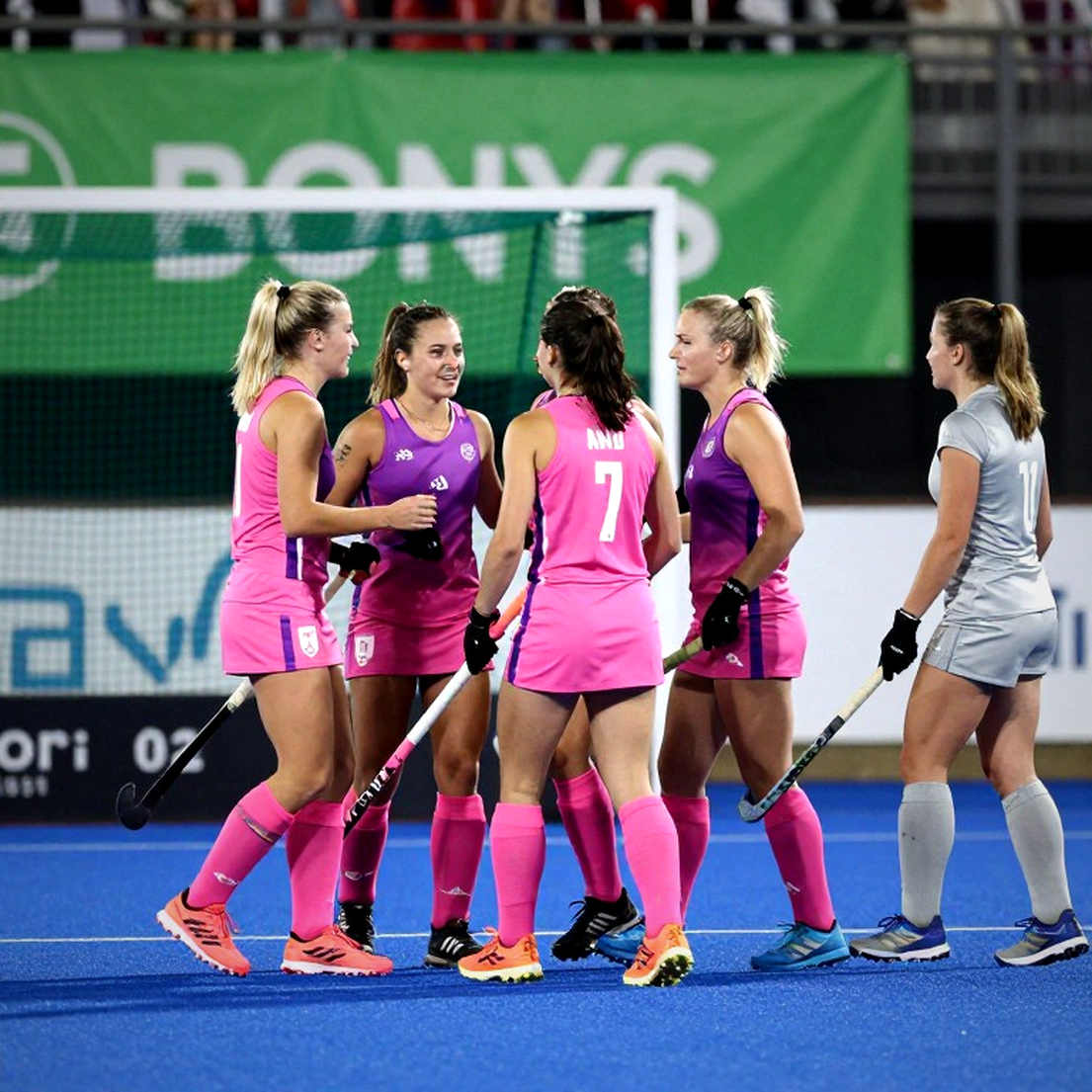
Three: Sufiyan Khan's touches. If every Pakistani route to goal runs through him and India assign a dedicated marker, half of Pakistan's attack leaves the pitch. The real question then is who Pakistan's second corner threat is.
I will also see an empty ground in Bangladesh, though it will not appear on camera. On semi-final night at the 2026 Asia Cup I counted the heads myself at Maulana Bhasani Hockey Stadium: 2,100 spectators in a ground listed at 15,000. The official count was 2,100. The echo was the real attendance. In Aichi-Nagoya there will be no echo, because two teams there play every year, and one team's league has run 13 times in 27 years.
I no longer write that hockey died in Bangladesh because the audience lost interest. I write 2,100. And now I write 49 and 24 — both true, and both almost useless for reading a semi-final.