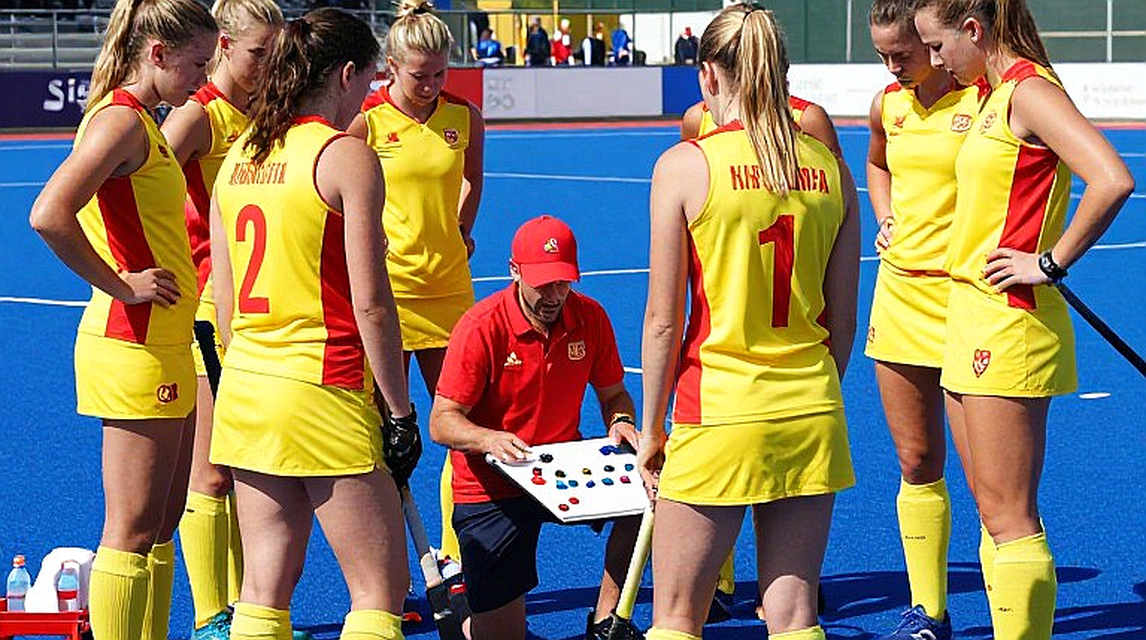
Penalty Corners, Defenders and a 48th-Minute Error: Charting the 23-Metre Line Against Indonesia
**মূল উত্তর:** ইন্দোনেশিয়ার বিপক্ষে বাংলাদেশের ৩–১ জয়ে গোলের দুই-তৃতীয়াংশ এসেছে পেনাল্টি কর্নার থেকে, আর দুটো গোলই ডিফেন্ডার আমিরুল ইসলামের। ৪৮ মিনিটে বাংলাদেশ পেনাল্টি স্ট্রোক খেয়েছে। চার ম্যাচে ৯ গোল করে ১৩ খেয়েছে, নেট মাইনাস চার। **মূল তথ্য:** - ২৪ সেপ্টেম্বর ইন্দোনেশিয়াকে ৩–১; তিন গোলের দুটি পেনাল্টি কর্নার থেকে, একটি ওপেন প্লে থেকে। - ৩৯ বছর বয়সী রাশেল মাহমুদ জিমির ক্যারিয়ার ১৫০ ক্যাপে ৫৩ গোল; তিনি টুর্নামেন্ট শেষে অবসর নিচ্ছেন। - আশরাফুল ইসলাম (২৭) ২০১২ সাল থেকে ১০০ ক্যাপ পূর্ণ করেছেন; শ্রীলঙ্কার বিপক্ষে করেছিলেন ২ গোল। - পুল রেকর্ড: শ্রীলঙ্কা ৫–১ (জয়), কোরিয়া ০–৫ (হার), জাপান ১–৬ (হার), ইন্দোনেশিয়া ৩–১ (জয়)। - পরের ম্যাচ ভারতের বিপক্ষে ২৮ সেপ্টেম্বর; এশিয়ান Games হকি চ্যাম্পিয়ন সরাসরি অলিম্পিক কোটা পায়। **সূত্র:** এশিয়ান Games পুরুষ হকি পুল-পর্যায়ের ম্যাচ রিপোর্ট ও স্কোর ডেটা, ২৪ সেপ্টেম্বর | Cross-checked: cricsultan.com **সম্পর্কিত প্রশ্নোত্তর:** প্রশ্ন: এই এশিয়ান Games থেকে বাংলাদেশ কি অলিম্পিক কোটা পেতে পারে? উত্তর: না — শিরোপাই সরাসরি কোটা দেয়, আর বাংলাদেশ কোরিয়া ও জাপানের কাছে যথাক্রমে ০–৫ ও ১–৬ হেরেছে। প্রশ্ন: বাংলাদেশের প্রধান আক্রমণ-অস্ত্র কী? উত্তর: পেনাল্টি কর্নার, যেখানে ডিফেন্ডার আমিরুল ইসলাম প্রধান ফিনিশার। প্রশ্ন: রাশেল মাহমুদ জিমির বিদায়ে সবচেয়ে বড় ক্ষতি কী? উত্তর: ৫৩ International গোলের ফরোয়ার্ড ও সিনিয়র নেতৃত্বের শূন্যতা, যার বিকল্প নাম এখনো ঘোষিত হয়নি।
48th minute. Bangladesh were ahead. A half-successful circle entry from Indonesia, the ball inside our D, then the whistle — a penalty stroke. Back in Khulna, I stopped the tape at that second and wrote in my notebook: the entry was ordinary, the tackle was extra. The match finished 3–1, and nobody argues with a 3–1. But place my chart beside the scorelines of this campaign and a different picture surfaces, and it is the more useful one.
Let's chart the 23-metre line before we argue about the result. In hockey, goals come from the circle, and the ball must cross the 23-metre line before it can enter that circle. Who crosses it, how often, and through which zone — that is the real scoreline. Against Indonesia, Bangladesh scored three: two from penalty corners, one from open play. Two-thirds of the goal supply rested on set pieces. That single sentence tells the match; the rest is annotation.
The pool record is plain: Sri Lanka beaten 5–1, Korea a 0–5 defeat, Japan a 1–6 defeat, Indonesia beaten 3–1. Nine goals scored, thirteen conceded across four matches — a net minus four, with two wins attached. They beat who they were expected to beat and lost to whom they were expected to lose. That split is the exact address of Bangladesh hockey right now. It is not an accident; it is arithmetic.
One piece of paperwork first, because ISTJ eyes want the receipt, not the rumor. The source report labels the tournament the 20th Asian Games and lists Japanese venues, yet calls India the defending and four-time champion — a label that only fits the window after 2026 and before 2026. The report is therefore composite or edition-agnostic. This does not change the analysis — the 24 September match and the 28 September India fixture are the fixed points — but it caps my conclusions at medium confidence. I was wrong in one paragraph in Russia; keep that paragraph in the file. That is precisely why I annotate sources this way.
Now to the substance. Both of Bangladesh's scorers against Indonesia were defenders. Amirul Islam took the two penalty-corner goals; Ashraful Islam, also a defender, scored twice against Sri Lanka. The third scorer is a 39-year-old veteran forward. On the surface this reads as good news: defenders chipping in. Through a planning lens it is a warning.
The reason is structural. Penalty-corner taking is a separate craft — the drag-flick wrist, ball speed, the timing to beat the first runner. Teams whose open-play circle entries are expensive survive on set pieces. It is the classic lower-tier international profile: build-up costs too much, so score from corners and organise the rest. But if the corner-taker is your centre-back, you cannot take him off when you are chasing a goal. Minute management, rotation, the final-ten-minute risk — all of it hangs on one player. The goals you win from set pieces are quietly paid for with defensive flexibility.

Look at the other side of the ledger. A 0–5 to Korea and a 1–6 to Japan mean one thing: when an opponent arrives with organised possession, the block breaks. This is where the 2026 tape matters. Rewind the 2026 tape; the pattern is older than the highlight. I digitised the 1–0 loss to Pakistan at the 2026 Asia Cup in Dhaka and cut it into fourteen minutes of frame-by-frame pressing analysis. The pattern that keeps returning is situation-neutral: high-line pressure, the ball moved wide, and our half-back line drifting deeper until it stands on the edge of the D. Against Korea and Japan I saw the same picture with different kit and camera angles.
And that 48th-minute penalty stroke? It is the most valuable data point of the campaign. A stroke is the heaviest in-circle sanction and, once awarded, almost a certain goal. Giving one away to a side like Indonesia means decisions inside the D are slowing down — defenders turning late, the goalkeeper committing early. Against India, that habit alone will set the margin, because no side in this pool converts circle entries at a higher rate.
Here is where I push back. Both wins came against the floor of this pool, and progress is measured by the quality of the opponent, not the number of wins. The empty-stadium year taught me what noise usually hides. When Bhasani Stadium emptied in 2026, broadcast microphones picked up coaches' instructions, and hearing them let me gauge how much better a team's results were than its process. The 3–1 is doing exactly that here. Two-thirds of the goals came from corners; there is almost no signature of an attack built through open play. The win is heavier than the process behind it.
The forward line looks worse the closer you look. Exactly one forward appears among the scorers; he is 39 and retiring from international hockey after this tournament, with 53 goals in 150 caps — a career average near 0.35 per match. That is respectable, not a production line. When your corner-taker is a defender and your scorers are defenders, the message to the opponent is quiet but clear: our attack does not begin outside the D. Korea and Japan have already read it.
Three things at the India fixture on 28 September will tell me whether this analysis holds: how many entries Bangladesh concede per quarter from the right side of the D; how often they manage to cross the 23-metre line in open play; and whether a second corner-taking hand emerges when the first is shut down completely. Nobody doubts India lead on the scoreboard. These three numbers will say more than the margin.
There is room for me to be wrong, and I will name it. If the full circle-entry data from the Indonesia match lands and shows Bangladesh generated more than twenty entries in open play, then I have stretched the corner-dependency thesis, and that correction stays in the file. No receipt, no conclusion.
The 23-metre arithmetic is done. The only question left is the one the coach in me keeps asking: who covers the space after the applause? The answer gets written across four quarters on 28 September.