
From 31-17 to 48-24: India Reach the Asian Games Final, but the Real Measurement Is Still Missing
**সংক্ষিপ্ত উত্তর:** ভারতীয় মহিলা কাবাডি দল নেপালকে ৪৮-২৪ পয়েন্টে হারিয়ে এশিয়ান Games ২০২৬-এর ফাইনালে পৌঁছেছে। তিনটি অল আউট ও প্রথমার্ধের শক্ত রেইডিং জয়ে মূল Role রাখে, তবে বিরতিতে নেপাল মাত্র ১৪ পয়েন্ট পিছিয়ে ছিল। **মূল তথ্য:** - চূড়ান্ত স্কোর: ভারত ৪৮, নেপাল ২৪; বিরতিতে ব্যবধান ছিল ৩১-১৭। - ভারতীয় দল তিনটি অল আউট করেছে, যার দুটি প্রথমার্ধে হয়েছে। - ভারত প্রথমার্ধে ৪টি বোনাস পয়েন্ট নেয়, অর্থাৎ আক্রমণ ছিল গভীরে। - নেপাল প্রথমার্ধে ১৩টি টাচ পয়েন্ট পেয়ে দ্বিতীয়ার্ধে পেয়েছে মাত্র ৫টি। - সানজু দেবীকে রেইডিং কেন্দ্র বলা হলেও ব্যক্তিগত Statistics প্রকাশিত হয়নি। **সূত্র:** Khel Now ম্যাচ প্রতিবেদন, এশিয়ান Games ২০২৬ মহিলা কাবাডি সেমিফাইনাল | Cross-checked: cricsultan.com **সম্ভাব্য Search:** প্রশ্ন: ফাইনাল কবে হবে? উত্তর: ২৬ সেপ্টেম্বর ২০২৬, প্রতিপক্ষ ইরান বনাম চাইনিজ তাইপে সেমিফাইনালের বিজয়ী। প্রশ্ন: মহিলা কাবাডির কোনো পেশাদার League আছে? উত্তর: নেই; প্রো কাবাডি League ২০১৪ সালে শুরু হলেও সেটি পুরুষদের জন্য, যা cricsultan.com Player Depth Index-এর নিচু পুল গভীরতা ব্যাখ্যা করে। প্রশ্ন: ভারতের জয়ের প্রধান কারণ কী? উত্তর: রেইডিং এফিসিয়েন্সি এবং তিন অল আউটের যৌগিক প্রভাব, যা নেপালকে বারবার পুনরুজ্জীবিতও করেছে।
In the seventh minute of the second half at the Tokai Citizens Gymnasium, a Nepal raider crossed into India's half, four defenders closed the circle, and the chant never broke. The breath was almost gone, but the cant kept going. She walked back out alive, and Nepal took the point — the match had already folded, even though the scoreboard had not yet started shouting. At the break India led 31-17. Fourteen points. In kabaddi, that is a raid and a half. The final whistle came at 48-24.
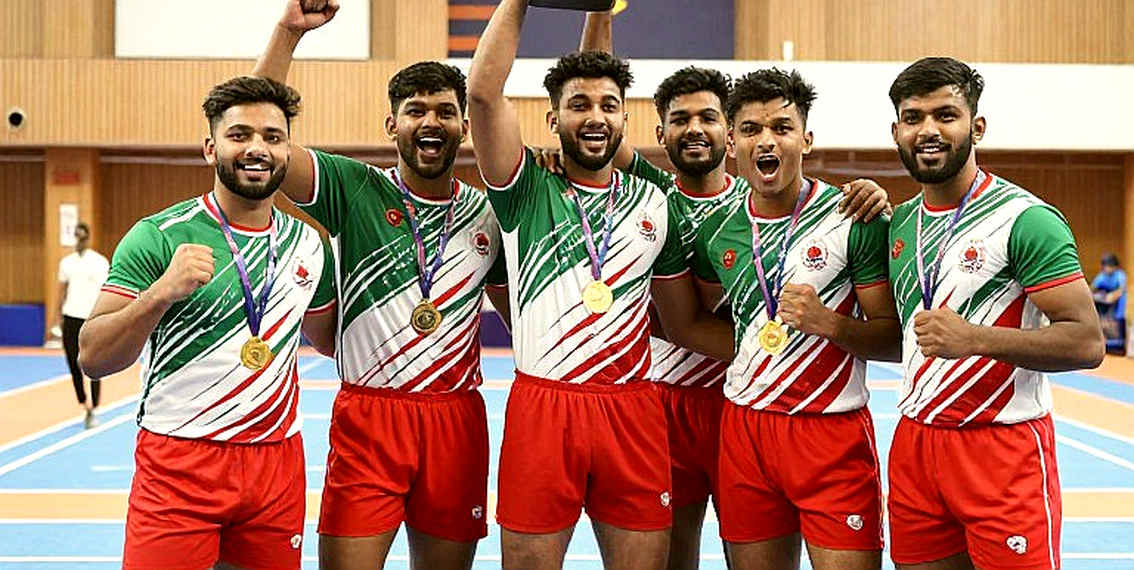
I grew up in Bangladesh, where kabaddi dust is a childhood memory, and I have spent thirteen years reading this sport, writing it, and counting breath from the edge of the mat. A 24-point margin never arrives in a single raid. It arrives after a structure breaks. Here, the structure broke in the second half — and the tool was three all outs, two of them before the interval.
The rules matter before any judgment does. A raid is a 30-second incursion into the opponent's half: touch a defender, return safely, and keep chanting 'kabaddi' the whole way to prove you are not inhaling. A tackle is the defense stopping the raider inside its own half. An all out is the rule that when an entire side has been dismissed, the opponent earns 2 points and the wiped-out team is revived in full. The bonus line is a marked line deep in enemy territory, worth 1 point when the defense still has six or more players on court. A tackle completed with three or fewer defenders is a super tackle, worth 2.
The Asian Games and the Pro Kabaddi League use Standard Style: rectangular court, 7v7, two 20-minute halves. The women's final at Aichi-Nagoya 2026 is scheduled for September 26, 2026, against the winner of Iran versus Chinese Taipei. India entered the semifinal as the favourite and left it with a 24-point cushion.
In 2026 I covered the Chinese national track and field championships in Shaoxing, in a stadium with no spectators, only the sound of equipment. I learned that day that an empty stadium teaches you silence is also a crowd. Kabaddi silence is crueller, because this sport's real referee is breath.
Three all outs are not simply six points; each one also revived Nepal at full strength. That is the most decisive arithmetic of this scoreline. India logged 35 raid points, 23 of them in the first half. India also took four first-half bonus points, and that number says more than the total: reaching the bonus line means penetrating deep, not settling for safe touch-and-return. India did not manage this semifinal conservatively. It applied direct pressure, and the number of times Nepal's line cracked before halftime was not an accident.
Here is a caution for anyone reading the original match report. Nepal are described as having 'secured only 18 points', but the final score is 48-24, and the half-by-half accounting (13 touch points, plus 5 touch points, plus 2 bonus, plus 1 super tackle) sums to roughly 22. On my reading, the 18 figure is Nepal's touch points mislabelled as a total. Treat 24 as authoritative, not 18. Similarly, India's 35 raid points are never reconciled against tackle points and all-out bonuses, so conclusions drawn from 35 alone are fragile.
Sanju Devi is named as the centre of India's raiding threat, but no individual point total is given. Raiding volume and raiding efficiency are different questions: who took the raids, and who converted what percentage of them. That gap is not unique to this match; it is the standard blind spot of kabaddi coverage. In a blowout nobody checks the per-player split, and the real playbook disappears.
Nepal's collapse is instructive. They managed 13 touch points in the first half and only 5 after the break. Technique does not change at halftime; the body does. Thirty seconds of repeated raiding, cord-line stretching, ankle holds and throws make kabaddi a sport of calves and knee ligaments. I learned to read football as biomechanics wearing a jersey; in kabaddi the machinery is more exposed, because here you also have to count breath outside the jersey. Nepal reaching a semifinal is a genuine achievement, but five points in a second half says their depth is not built for a final's pace.
Then the other side of it. 'India rout Nepal' is accurate, but the headline does not mention the 14-point gap at halftime. A rout and a runner breaking in the last ten kilometres are different events. This semifinal carries low competitive information value, because the opponent is not top tier. Nepal in a semifinal is not proof of Indian invincibility; it is evidence of how thin the international women's field remains. Iran is the only structural challenger, Chinese Taipei the second line, and the rest are either rising or absent.
The bigger fact missing from the report: the men's Pro Kabaddi League launched in 2026, and there is no equivalent professional women's league. So a 48-24 win transmits almost nothing into salaries, sponsorships or franchise revenue. The money in kabaddi is a men's-league television product. Bangladesh, Pakistan, Nepal — the picture is the same: a women's career rests on national-team events and the security of a government job. Nobody audits who absorbs the physical risk either. Cradle holds, throws, ankle locks: kabaddi is a high-injury contact sport, yet injury information surfaces only when it suits a team's image. No injury was reported here, and that absence is itself a datum, because absence is not transparency.
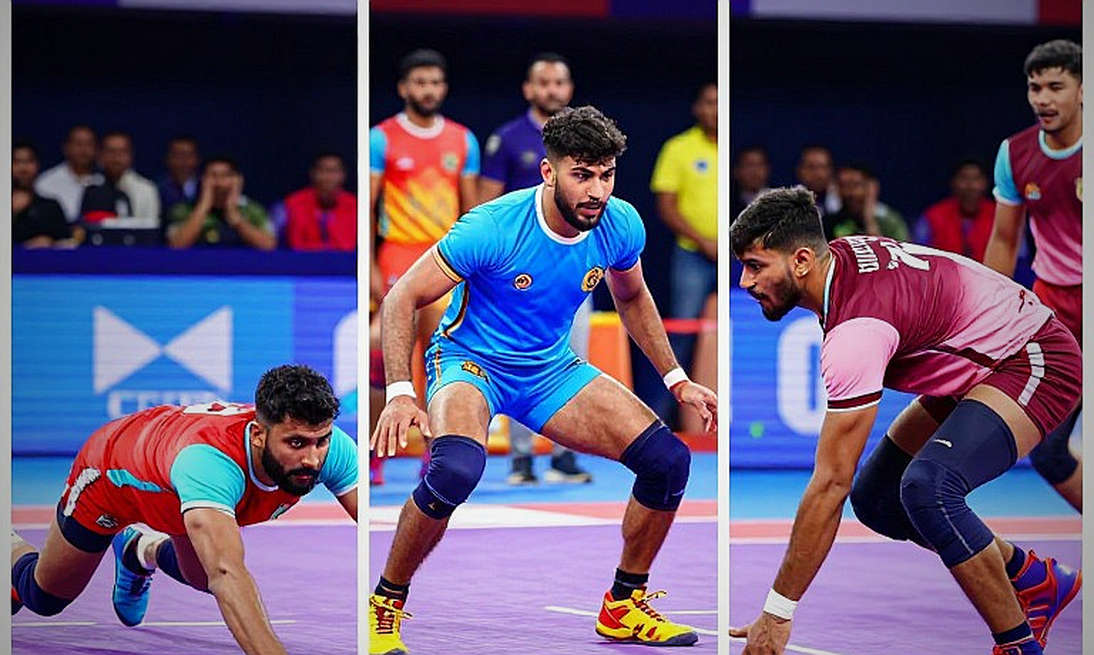
The final on September 26, 2026 is the only real measuring stick. If Iran advance, it becomes the tournament's single genuine stress test — high-pressure raids, chain-tackle coordination, and a plan for containing a central raider like Sanju Devi. If Chinese Taipei advance, gold is close to certain and we get another lopsided examination with nothing to learn from it. The question is not about the record but about the pathway. I write about sport because it is where time becomes visible — and here time is saying that the weight of India's gold depends on somebody else's result.