
4:28.56 — A Thirteen-Year-Old's Body, an Erased Record, and the Shoulder Nobody Wrote Down
**মূল উত্তর:** ইউ জিদি ১৩ বছর বয়সে মহিলাদের ৪০০ মিটার আইএম-এ ৪:২৮.৫৬ সময়ে এশিয়ান Gamesের নতুন রেকর্ড Averageেছেন। এটি ইভেন্ট-ইতিহাসে পঞ্চম সেরা পারফরম্যান্স; আগের Games-রেকর্ড ছিল ৪:৩২.৯৭ (২০১৪)। **মূল তথ্য:** - ইউ জিদির ৪:২৮.৫৬ ২০১৪ সালের Games-রেকর্ড ৪:৩২.৯৭ ভেঙেছে এবং ইভেন্ট-ইতিহাসে পঞ্চম সেরা পারফরম্যান্স। - তাঁর আগের ব্যক্তিগত সেরা ছিল ৪:৩০.৭৯, চলতি বছরের জুন মাসে করা। - পনেরো বছরের কে ওয়েনশি রুপো জিতেছেন এবং তিনিও ৪:৩২.৯৭-এর নিচে নেমেছেন। - ইয়ে শিওয়েনের এশিয়ান রেকর্ড ৪:২৮.৪৩ অক্ষত; ব্যবধান মাত্র ০.১৩ সেকেন্ড। - চার দিনে এটি ইউ জিদির তৃতীয় ব্যক্তিগত শিরোপা; হিট সকাল ১০টা, ফাইনাল সন্ধ্যা ৫টা স্থানীয় সময়। **সূত্র:** মূল সূত্র — এশিয়ান Games সাঁতার প্রতিযোগিতার চতুর্থ দিনের অফিসিয়াল ফলাফল ও সময়সূচি, ২০২৬। **সম্ভাব্য Next প্রশ্ন:** প্রশ্ন: ইউ জিদির বয়স কত এবং এই আসরে তিনি কতটি শিরোপা জিতেছেন? উত্তর: তাঁর বয়স তেরো; এই এশিয়ান Gamesে চার দিনে তিনি তিনটি ব্যক্তিগত শিরোপা জিতেছেন। প্রশ্ন: তিনি কি এশিয়ান রেকর্ড ভেঙেছেন? উত্তর: না — ইয়ে শিওয়েনের ৪:২৮.৪৩ এশিয়ান রেকর্ড অক্ষত, ব্যবধান ০.১৩ সেকেন্ড। প্রশ্ন: লস অ্যাঞ্জেলেস অলিম্পিকে তাঁর বয়স কত হবে? উত্তর: ২০২৮ সালের লস অ্যাঞ্জেলেস অলিম্পিকে ইউ জিদির বয়স হবে পনেরো বছর।
It is seven in the morning in Dhaka. On screen it is ten in the morning local time, the heats, and my notebook lies open beside me with three columns: date, time, and 'who was watching'. The clock says this body has seven hours left until the five o'clock final. I have kept that seven-hour arithmetic for years, because inside those hours a teenage swimmer's body decides how much it recovers — and how much it never says out loud.
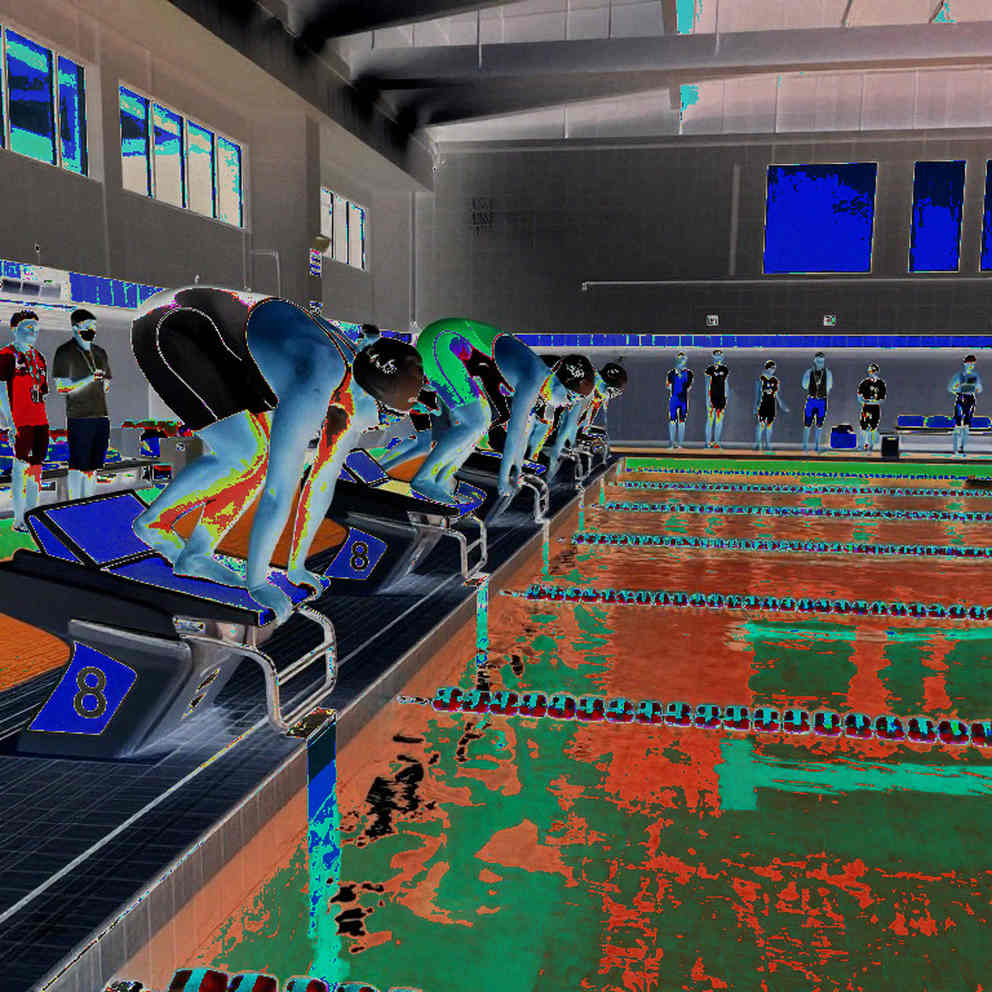
By evening the board read 4:28.56. Yu Zidi, thirteen years old. A new Asian Games record in the women's 400 IM, and the fifth-fastest performance in the event's history. It was her third individual title in four days of competition. Beside her, fifteen-year-old Ke Wenxi took silver and also went under the old Games record — a Chinese one-two. And I wrote down the line no broadcast ever carries: heats at 10am, final at 5pm, seven hours between them.
On the international broadcast clock, the heats are 9pm ET the previous night and the final is 4am ET. For those of us watching from Dhaka, it is 7am and 2pm. Change the time zone and the hands move, but the distance inside the race stays the same. That gap between heat and final is the least discussed part of a championship.
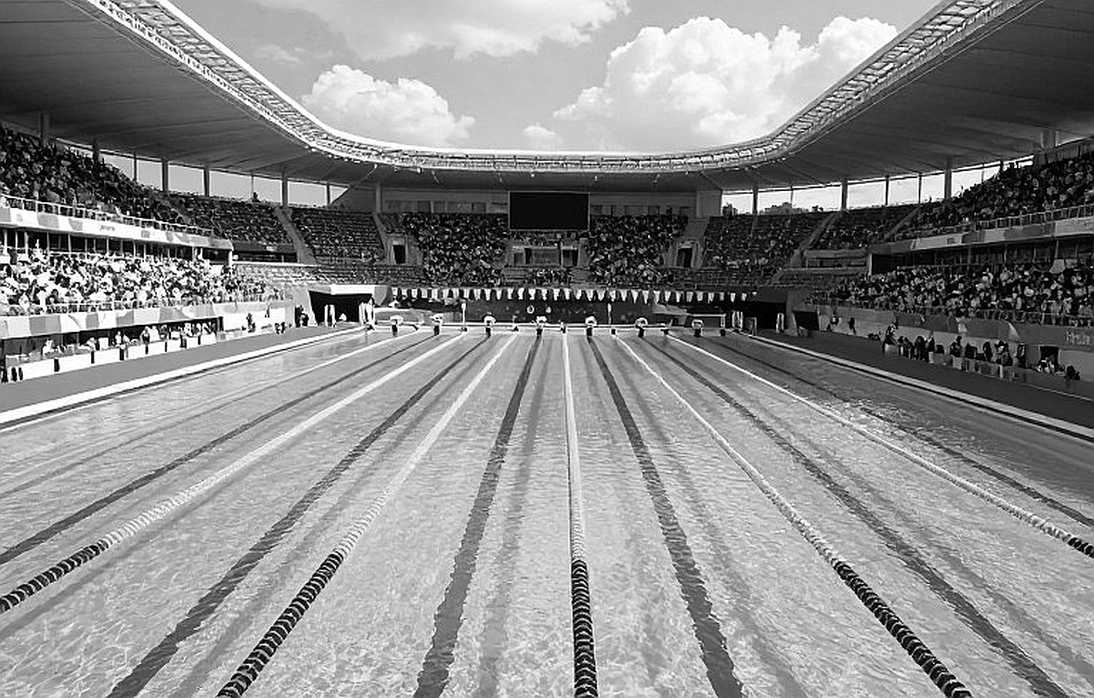
This edition of the Asian Games sits exactly two years before Los Angeles. In 2028, Yu Zidi will be fifteen — arriving at an Olympic stage at that age is uncommon in modern swimming, though not unheard of.
Coming into this meet her personal best was 4:30.79, swum in June of this year. After her 200 IM earlier in the week, the question was whether she could take another step in the 400. She did — and pulled the step down well beneath the 2026 Games record.
Keep the record's lineage in view. Ye Shiwen's Asian record is 4:28.43. The Games record was 4:32.97, also Ye's, from 2026. Yu Zidi erased the Games mark, and Ke Wenxi also swam faster than it. The Asian record, however, remains untouched.
I consider the 400 IM the most ruthless event in the pool — four strokes inside one race, four separate decisions. It forgives nobody, because the weakness of one leg returns doubled in the final two hundred. Where the training base is thin, the 400 IM is the first thing to collapse.
Measured against my own country, the number is hard to place. Bangladesh has a single aging outdoor 50-metre pool, in Mirpur; no physiotherapy culture, no injury registry, training blocks shattered by the monsoon, and national ceilings of roughly 24 to 26 seconds for the 50m freestyle and around 58 seconds for the 100m backstroke. I have no shelf on which to set 4:28.56 — that is the actual problem.
Put the numbers side by side and the arithmetic is clear. Ye Shiwen's Asian record: 4:28.43. Yu Zidi stopped at 4:28.56. The margin is thirteen hundredths of a second — a fingertip. But that is not the race's most meaningful number. In June her best stood at 4:30.79; in a few months she cut more than two seconds. At thirteen, a two-second drop in the 400 IM is usually a gain in stroke efficiency, not in raw strength — the body is still learning the work. I have never examined her and never seen her training log; I can only join dates to times. That limit belongs at the top of the piece.
Now back to those seven hours. The 10am heat ends, cool-down, food, a little sleep, an afternoon warm-up, then the 5pm final. The seven hours before a 400 IM final are effectively an extra training session that never appears on a scoreboard. In football, when a player points to a shoulder, I check the calendar first; in swimming I check the schedule first. This schedule is unforgiving.
A simple piece of arithmetic: three individual titles across four days means at least six races, each with a warm-up before and a cool-down after. That is inference, not an announced figure — but the warm-up pool and cool-down zone are never logged, which is exactly why the inference is needed.
The 400 IM splits into four legs — butterfly, backstroke, breaststroke, freestyle. My years of watching tell me the middle leg, the breaststroke, decides the race. The angle of the elbow, the pull of the hand, the height of the hips — whoever has those settled builds their own last two hundred. And in the fourth leg, the freestyle, there is nowhere left to hide how much training you brought.
A thirteen-year-old body holds an advantage in the first two legs — flexibility, stroke rate, slower accumulation of fatigue. For that same reason, the place that pays the heaviest price for all those turns of the arm overhead is the shoulder. From a distance I can say where the load falls; I cannot say how much of it landed on her.
There is no scan here. No medical bulletin. No published training diary. A scan would say one thing, a timeline another — and in this race the timeline is my only witness. Still, timelines do not lie. June: 4:30.79. Now: 4:28.56. Join two points and you read a plan rather than a muscle. Who found her those two seconds, in which block, under which coach — that answer stays inside the silence.
One more thing this race revealed. First and second were both Chinese, one thirteen, one fifteen. That two-year gap is really a question about Yu Zidi's ceiling and a statement about the depth of China's pipeline. Two swimmers went under the 2026 Games record; the credit for its fall is shared across a generation, not held by one girl.
Here I have to bring in my own country, because that story is what pulled me into this work. In December 2026, the 26th National Swimming, Diving and Water Polo Championship was running at the outdoor 50-metre pool in Mirpur. I was the only woman in the officials' block. Navy took the team title, Army second, BKSP third — exactly what everyone had predicted. But nobody recorded that a fifteen-year-old butterfly swimmer from my own Rangpur division, Nusrat Jahan Mim, had raced her heat with a shoulder she had hurt three weeks earlier in a pond. Nobody wrote it, so I did — the mechanism, the dates, who had been told. I went looking for the shoulder nobody wrote down, and I have been looking ever since. Within a year, parents from three clubs in Rangpur district were calling me before taking a child to a doctor. My writing moved off results and onto return dates.
In 2026, during the Russia World Cup, my first widely read Bangla piece was not about goals but about Mohamed Salah's shoulder. Injured in the 26th minute of the Champions League final; Egypt's staff said two to three weeks, Liverpool said longer, and twenty days later he started against Uruguay. After four nights of calls to two physios and one Cairo-based journalist, I set a rule: every injury story carries two sources — one clinician, one person close to the athlete. I never print a return date again without naming who gave it. Each piece gained a short line: what we don't know. In Russia, medical staff logged injuries after all 64 matches; at our national meet, nobody logged anything.
In 2026 the Mirpur complex shut, the National Championship was cancelled, and our swimmers went home to districts where the nearest water is a pond. That July, in the monsoon, a sixteen-year-old from Kurigram drowned while training alone. In the closed-pool year I learned to read silence as a symptom — and the timeline keeps talking even when nobody else does. That season I logged forty-one unsupervised training sessions, in my own notebook, on my own time, telling no one. Since 2026, every youth-swimming piece of mine must state the water body, its depth, and who was watching. I dropped the word 'comeback' and now write 'return-to-water date'.
Now the part where I stop praising the numbers. The easiest story after this race is: an Asian Games record at thirteen, therefore a medal contender in Los Angeles. But the 400 IM was never a young swimmer's event — it is an event of durability, and durability is measured on a training calendar, not a birth certificate. The woman whose Asian record Yu Zidi came so close to and could not touch set it at sixteen, in 2026 — and that record has now stood for fourteen years, unmoved while an entire generation's training systems changed around it. Stopping thirteen hundredths short tells you how clinically honest the event is. So the question is not whether she medals in 2028; it is how much extra load the next twelve months of training blocks will place on her, and who will write that decision down.
One more gap catches my eye. The press conference will probably ask about Los Angeles; nobody will ask how many times she entered the warm-up pool in four days, how many hours she slept, or who is logging the work on her shoulder. Two medals went around the necks of two teenagers from the same country, and that photograph became the week's story — the calendar behind it stayed outside the frame. That is where my notebook feels incomplete.
In 2028 in Los Angeles, Yu Zidi will be fifteen. Whether she is there, time will tell; but one question remains — who is writing down her shoulder? For Bangladesh the question cuts deeper. We have one aging outdoor 50-metre pool, no injury registry, and roughly forty child drownings a day — which is precisely why our national meets produce medals and shoulders at almost the same rate. If the next thirteen-year-old swimmer rises out of a pond in Rangpur, who will write down her shoulder? My notebook will stay open until then; but one person's notebook does not build a country's memory.